
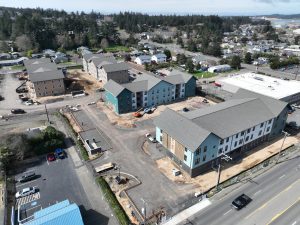
Across the country, and especially in rural communities, affordable housing developments are often met with fear, misinformation, and assumptions that simply do not reflect the reality of how affordable housing works, operates, or strengthens communities.
We hear the same claims repeatedly:
- “Affordable housing brings crime.”
- “It will turn into blight.”
- “These properties become drug dens.”
- “A tax-exempt Housing Authority drains local services.”
These talking points are emotionally charged, but they are not supported by data, professional housing operations, or the long-term outcomes of well-managed affordable housing communities.
As someone who works every day in affordable housing development, public housing operations, homelessness response systems, and community infrastructure, I believe it is important to separate myth from reality.
The Research Does Not Support the Fear
One of the most common arguments against affordable housing is the belief that it lowers surrounding property values or increases crime. Decades of research have largely found the opposite or no measurable negative impact at all.
A 2022 study from the University of California Irvine’s Livable Cities Lab found that affordable housing developments in Orange County were associated with reductions in crime and increases in nearby property values. Researchers found surrounding homes gained approximately $16,000 in value near affordable housing developments.
Research on Low-Income Housing Tax Credit developments has also shown that affordable housing can revitalize distressed neighborhoods, stabilize communities, and reduce long-term deterioration. The reality is that stable housing does not create decline. Lack of affordable housing does.
Affordable Housing Residents Are Already Part of the Community
Affordable housing does not “import” struggling families into a community. In most cases, the people who live in affordable housing already work, live, or have roots in the area.
They are:
- Seniors on fixed incomes
- Veterans
- Working families
- Healthcare workers
- Retail employees
- School staff
- Young families
- People with disabilities
- Households being priced out of the rental market
The question is not whether these residents exist. They already do.
The real question is whether communities are willing to create housing that allows local families, workers, seniors, and young people to remain here. Will we do the hard work and take care of our own, or will we continue down a path where our children and workforce are forced to leave communities like the South Coast in search of housing they can afford? That is already happening.
Affordable housing is an opportunity to change that trajectory. It is a chance to invest in the future of a community rather than slowly watching it decline under the weight of housing shortages and rising costs.
Some Existing Affordable Housing Stock Is Already Failing
One of the hardest truths in housing is that many communities have not done a good job preserving affordable housing over the last several decades. Across rural Oregon and much of the country, aging affordable housing properties were built generations ago and then slowly underfunded, deferred, or neglected over time.
In some cases, the affordable housing critics point to as “proof” that affordable housing fails is actually proof of what happens when communities fail to continuously reinvest in housing infrastructure:
- Old roofs
- Failing plumbing
- Outdated electrical systems
- Deferred maintenance
- Buildings reaching the end of their useful life
That is not a failure of affordable housing itself. It is a failure of preservation, long-term investment, and asset management.
Many Housing Authorities inherited aging portfolios shaped by decades of inconsistent federal funding, rising inflation, escalating construction costs, and deferred capital needs. But a new generation of housing leadership is changing that.
At our Housing Authority, we believe affordable housing should not merely survive. It should be safe, beautiful, energy efficient, professionally managed, community-centered, and something residents can feel proud to call home.
That means:
- Redeveloping aging sites
- Preserving existing affordable housing
- Modernizing older units
- Pursuing energy efficiency upgrades
- Investing in long-term sustainability
- Building new affordable housing for the first time in decades
- Integrating supportive services where appropriate
- Creating developments that strengthen neighborhoods instead of isolating people
Communities cannot complain about aging affordable housing while simultaneously opposing the investments required to modernize and replace it.
Professionally Managed Affordable Housing Is Highly Regulated
Public Housing Authorities and affordable housing operators function under extensive federal and state oversight. Affordable housing is not unmanaged housing.
These properties are subject to:
- HUD inspections
- State compliance monitoring
- Financial audits
- Lease enforcement
- Property management standards
- Crime-free housing policies
- Income certifications
- Maintenance standards
- Long-term compliance requirements
- Capital planning obligations
Affordable housing developments are often monitored more closely than market-rate housing.
The reality is that neglected private properties with absentee ownership often create far more neighborhood deterioration than professionally managed affordable housing communities.
Housing Stability Reduces Community Strain
There is a major difference between poverty existing in a community and housing causing crime. Housing instability, homelessness, untreated behavioral health conditions, and economic desperation increase community strain. Stable housing helps reduce it.
When people have stable housing:
- Emergency room utilization decreases
- Children perform better in school
- Families stabilize
- Healthcare outcomes improve
- Workforce retention improves
- Communities reduce pressure on emergency systems
Permanent Supportive Housing and affordable housing are often some of the most effective tools communities have to reduce visible homelessness and chronic system utilization. Housing is infrastructure. It is community stabilization infrastructure.
Modern Affordable Housing Looks Different Than People Think
Modern affordable housing developments are not the stereotypical projects many people imagine from decades ago. Today’s developments are often:
- Energy efficient
- Professionally landscaped
- Built to long-term durability standards
- Designed with community spaces
- Constructed under strict state and federal requirements
- Built for long-term asset management
- Designed to serve communities for generations
In many rural communities, new affordable housing developments are becoming some of the newest and highest-quality multifamily housing stock in the region.
The idea that these developments automatically become blighted ignores the reality that Housing Authorities and mission-driven developers are required to maintain them for decades under compliance agreements tied to public funding.
Housing Authorities Are Economic Engines
Another reality that often gets ignored is the amount of economic activity Public Housing Authorities generate inside local communities.
At our Housing Authority alone:
- We pay over a quarter million dollars annually into local contractors and vendors
- Our Housing Choice Voucher Program injects more than $6 million per year directly into the local rental market through payments to local landlords
- The preservation and modernization of our housing portfolio infuses millions more into the regional economy through contractors, suppliers, maintenance, and capital projects
- The construction of North Bend Family Housing Phase I alone has already injected millions of dollars into the local economy through construction jobs, engineering, architecture, permitting, infrastructure work, subcontractors, and materials
Those dollars do not disappear. They circulate through:
- Local businesses
- Contractors and trades
- Utility systems
- Restaurants and retailers
- Construction companies
- Professional services
- Property owners
- Workforce spending
In many rural communities, affordable housing developments are among the largest single economic investments occurring in decades.
The Housing Choice Voucher Program Supports Local Landlords
One of the biggest misconceptions is that affordable housing exists outside the private market. In reality, Housing Choice Voucher programs directly support private landlords throughout communities.
More than $6 million annually flows directly into privately owned rental housing through federally funded vouchers.
That revenue:
- Helps landlords maintain properties
- Supports mortgages and operating costs
- Stabilizes rental income
- Keeps units operational
- Sustains the local rental market
Without those dollars, many landlords would lose stable revenue streams and many families would lose access to housing entirely.
The Tax Argument Misses the Bigger Picture
Another common argument is that because Public Housing Authorities are tax-exempt, they somehow do not contribute toward city services or infrastructure costs. That claim ignores how affordable housing developments actually function and how deeply connected they are to the local economy.
Housing Authorities and affordable housing developments still pay:
- Utility bills
- Water and sewer charges
- Permit fees
- System Development Charges
- Engineering review costs
- Construction-related fees
- Vendor contracts
- Infrastructure costs
- Local service expenses
More importantly, Housing Authorities bring millions of outside federal and state dollars into communities that otherwise would not exist locally. Those dollars circulate throughout the local economy.
The purpose of tax exemption is not to avoid contributing to communities. It is to allow public-purpose housing agencies to reinvest more resources directly back into:
- Housing preservation
- Property modernization
- Resident services
- Operations
- Capital repairs
- Long-term affordability
The real question communities should ask is not: “What taxes are they paying?”
The real question is: “What would this community lose without this housing infrastructure?”
Because communities without affordable housing eventually begin losing:
- Workforce
- Young families
- School enrollment
- Economic growth
- Healthcare staffing
- Business stability
- Seniors aging in place
- Housing stability itself
Communities die on the vine when those things leave.
Affordable Housing Is a Public Good
Affordable housing is not simply a private transaction between landlord and tenant. It is essential community infrastructure.
A community cannot claim to value:
- Teachers
- Nurses
- Seniors
- Veterans
- Young families
- Workforce retention
- Economic growth
while simultaneously opposing the housing those populations rely on to remain part of the community.
The reality is simple:
Affordable housing does not weaken communities. In many cases, it is one of the only things preventing workforce collapse, economic stagnation, rising homelessness, and long-term decline.
Affordable housing is not the problem.
It is part of what keeps communities alive