
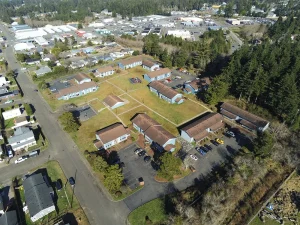
 We have officially entered Woodland Preservation Mode, marking an important step forward for a site that has served the community for decades.
Thanks to new funding from Advanced Health through its CHIP program and support from the Oregon Community Foundation, we are now able to begin Capital Needs Assessments (CNAs) for the Woodland property.
Woodland was originally built in the 1970s and, like many aging housing assets across rural Oregon, has strong bones but is in need of thoughtful reinvestment to meet modern standards of livability, accessibility, and sustainability. This funding allows us to take a careful, data-informed look at what it will take to responsibly preserve and modernize the site for the long term.
The Public Housing Authority manages the property on behalf of the nonprofit owner, providing professional property management, compliance oversight, and operational stability. This role is central to the SPARC framework: the PHA serving as a steady backbone while planning, capital strategy, and service alignment move forward in a coordinated way.
The CNA process will help guide long-term planning—identifying priority investments, informing future funding strategies, and ensuring that improvements are phased in a way that minimizes disruption while maximizing impact for residents.
We are incredibly excited to finally begin this work. Preservation isn’t just about maintaining buildings—it’s about making homes more livable, more dignified, and better aligned with the needs of today and tomorrow. Woodland has been a community asset for generations, and this is the first step toward carrying it forward into its next chapter.
More to come as planning continues, but for now, the path is clear and the work is underway.
Written by Matthew Vorderstrasse, Executive Director