
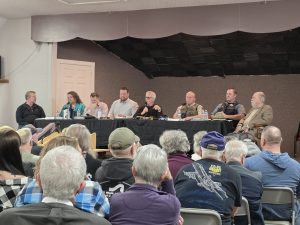
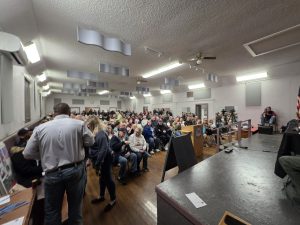
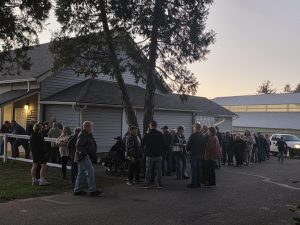
Homelessness is one of the most difficult issues a community can face. It touches public safety, neighborhood livability, local businesses, public space, and human dignity all at once. In rural and coastal communities, those tensions are often magnified because everyone knows each other and impacts are felt immediately.
Recently (1/16/2026), I had the opportunity to speak at a Brookings Harbor Town Hall focused on homelessness. More than 200 people attended. Residents, business owners, faith leaders, service providers, elected officials, and community members spoke passionately from many different perspectives. Some expressed frustration and fear. Others shared lived experience, compassion, and hope for solutions.
I am sharing that conversation here because it is a real example of how challenging this topic is, especially in a small harbor district.
You can watch the full Brookings Harbor Town Hall livestream here:
https://www.facebook.com/share/v/15Zk6hrfghW/
The views expressed during the town hall reflect a wide range of community perspectives and do not represent the positions of the North Bend City Housing/Coos-Curry Housing Authorities. The recording is shared for educational purposes.
Why These Conversations Are So Hard and So Necessary
Homelessness is not an abstract policy issue. It is personal. It affects where people work, shop, recreate, and live. When communities do not have clear systems in place, these pressures surface publicly in meetings like this one.
That does not mean the conversation is failing. It means the conversation is real.
The challenge is moving beyond frustration and fear toward solutions that actually work.
Turning Visible Problems Into Opportunities
In many communities, homelessness first becomes visible through trash accumulation, public health concerns, and impacts to local businesses and neighborhoods. Those concerns are real and deserve to be addressed.
In several Oregon communities, including Jackson County, those issues were addressed through Clean Sweep style employment and job training programs. These programs did more than clean up trash. They created paid work opportunities for people experiencing homelessness, helped build job skills and routine, and improved relationships between businesses and unhoused individuals.
Local businesses contracted with these programs to clean around their buildings, with services later expanding to landscaping and maintenance. Outreach teams and livability officers worked alongside law enforcement during encampment cleanups, helping people transition into managed spaces rather than simply being displaced.
What began as a complaint became an opportunity. Businesses benefited, neighborhoods improved, and participants gained stability and dignity.
Why Managed Spaces Matter
One of the most important tools in a homelessness response system is a managed, waitlisted space with a clear operational plan.
A successful managed site has a single overseeing organization, a waitlist based intake process, and a focus on stabilization and transition rather than long term warehousing. As people move into housing, beds open for the next person on the list. This creates structure, predictability, and flow.
Managed spaces control the front door, reduce chaos, and allow staff to focus on outcomes rather than constant crisis response. When done correctly, they save lives and minimize impacts to surrounding neighborhoods.
Operations Matter More Than Location
One of the most common misconceptions is that shelter or village locations automatically create disruption. In practice, operations matter far more than geography.
In Medford, visiting officials often toured shelter and village sites without realizing they were standing next to them. Strong operational planning, clear rules, adequate staffing, and consistent services made those sites quiet and unobtrusive.
The goal is not to hide homelessness. The goal is to manage it in a way that protects lives and communities at the same time.
Homelessness Is a Continuum Problem
Homelessness does not exist in isolation. It is connected to the broader housing market and workforce system.
To restore flow, communities must build the entire housing continuum at the same time. That includes managed emergency spaces, transitional housing, permanent supportive housing, affordable and subsidized rentals, and market rate housing.
Think of the housing system like a conveyor belt. Right now, that belt is stuck. When people cannot move forward, pressure builds everywhere. Emergency responses become permanent, shelters fill up, and people remain trapped.
Workforce development and education must be integrated across the entire continuum so stabilization, employment, and housing move together.
Why Enforcement Alone Does Not Work
Ordinances and enforcement alone do not solve homelessness. They often result in displacement rather than resolution.
Along the South Coast, this dynamic is visible today. Local ordinances restricting where people can exist have contributed to certain areas, including the Brookings Harbor, housing a disproportionate number of unhoused neighbors. This is not because those areas are uniquely attractive, but because they are some of the few remaining places where people are not immediately displaced.
Without alternatives, enforcement simply moves the problem down the road.
Addressing the Myth of Migration
Another common concern is that services will attract people from elsewhere. Our experience does not support this.
Across the South Coast, most people experiencing homelessness are members of the very communities where they are unhoused. They did not move here to be homeless. Many were previously housed locally and experienced job loss, health crises, aging, grief, or family disruption.
When Jackson County expanded shelter capacity to more than 500 beds, there was no mass migration. Communities like Grants Pass still had their own unhoused residents and eventually asked for help.
A helpful way to think about homelessness that I learned from Pastor Chad in Medford. Homelessness is like someone falling into a well. We may wonder how they got there. They may have tripped, jumped, or been pushed. Regardless of how it happened, they still need help getting out.
Moving Forward Together
None of the solutions described above were created by a single organization or jurisdiction acting alone. Progress required coordination across cities, counties, housing authorities, service providers, faith based organizations, behavioral health partners, education and workforce systems.
Jurisdictional boundaries do not stop homelessness, and solutions cannot stop there either.
If you would like to read the full written testimony I submitted to Curry County following the town hall, you can find it here:
Brookings Harbor Townhall- Testimony- 1-16-26
Homelessness is both an emergency and a systems failure that has developed over decades. We did not arrive here overnight, and we will not fix it overnight. But with managed spaces, strong operations, supportive services, and a complete housing continuum, communities can move from reaction to resolution.
This work is difficult. It is emotional. And it is possible.
By,
Matthew Vorderstrasse, M.A., PHM