
All this week (end of January 2026), Point-in-Time Counts are taking place across the country. They are intended to be a single snapshot of homelessness, and those snapshots carry real weight — funding formulas, resource allocation, and policy decisions are tied to them.
I often question the logic of conducting these counts in the dead of winter, when weather pushes people into hiding. But those decisions are made far above any local pay grade. What is within our control is taking the count seriously and doing it as accurately as possible.
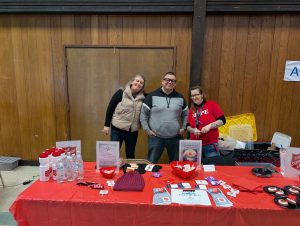
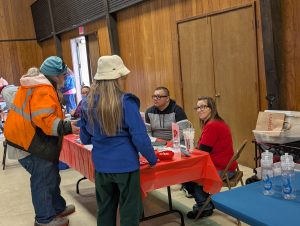
Today, at one of our local PIT count events, I found myself in a conversation that stuck with me. We talked about how much of homelessness is invisible — and how most of the general public will never truly understand the how or the why. Not because they don’t care, but because they never see the full extent of it — and hopefully, never have to experience it.
Seniors sleeping in cars. Families with children avoiding shelters that risk separating them, choosing instead to remain hidden — rotating between couches, cars, and temporary arrangements, never becoming part of the visible chronic homelessness the public tends to recognize. Survivors of domestic violence quietly starting over. People with serious medical or mental health needs who were not born into families with safety nets. None of this fits the stereotype that dominates public perception.
Instead, homelessness is often reduced to disorder, loitering, substance use, and crisis. Anger grows on all sides. Town halls fill up. Communities struggle to reconcile fear with compassion as they grapple with a mounting issue that feels both urgent and unsolvable.
That conversation led me to think about something unexpected: comic books, cartoons, and Superman.
When the first Superman cartoons aired in the 1940s, they carried a deliberate agenda. They targeted the Ku Klux Klan by exposing its mythology and moral emptiness, shaping the values of a new generation in the process. Within a decade, the Klan lost much of its public acceptance and fractured into a diminished movement. Media didn’t solve hatred — but it helped change the culture that sustained it.
What if we did something similar with homelessness?
What if we created stories and media that helped shape empathy before fear took hold? What if we invested in narratives that taught children — and reminded adults — that homelessness is not a moral failure, but a human condition shaped by circumstance, trauma, and systems that do not work for everyone?
We can align systems. We can manage symptoms while addressing root causes. But systems alone do not change hearts.
If we truly want homelessness to become rare, community — and the stories we tell about one another — may be the most powerful tools we have.
By
Matthew Vorderstrasse, M.A., PHM.
Executive Director